
Guide to Safe Jet Skiing in Dubai
Table of Contents
Jet skiing is an exciting way to explore Dubai’s coastline, enjoy the open water, and experience the thrill of riding a powerful personal watercraft. But while jet skiing can be a lot of fun, it also requires responsible operation, awareness of your surroundings, and respect for the sea.
Whether you’re riding a jet ski for the first time or have years of experience, understanding basic safety procedures can help reduce risks and make your experience more enjoyable.
This complete guide covers jet ski operation, essential safety tips, emergency procedures, risk management, and practical advice for riding safely in Dubai.
Why Jet Ski Safety Matters
A jet ski, officially known as a personal watercraft (PWC), is a powerful motorized vessel capable of travelling at high speeds.
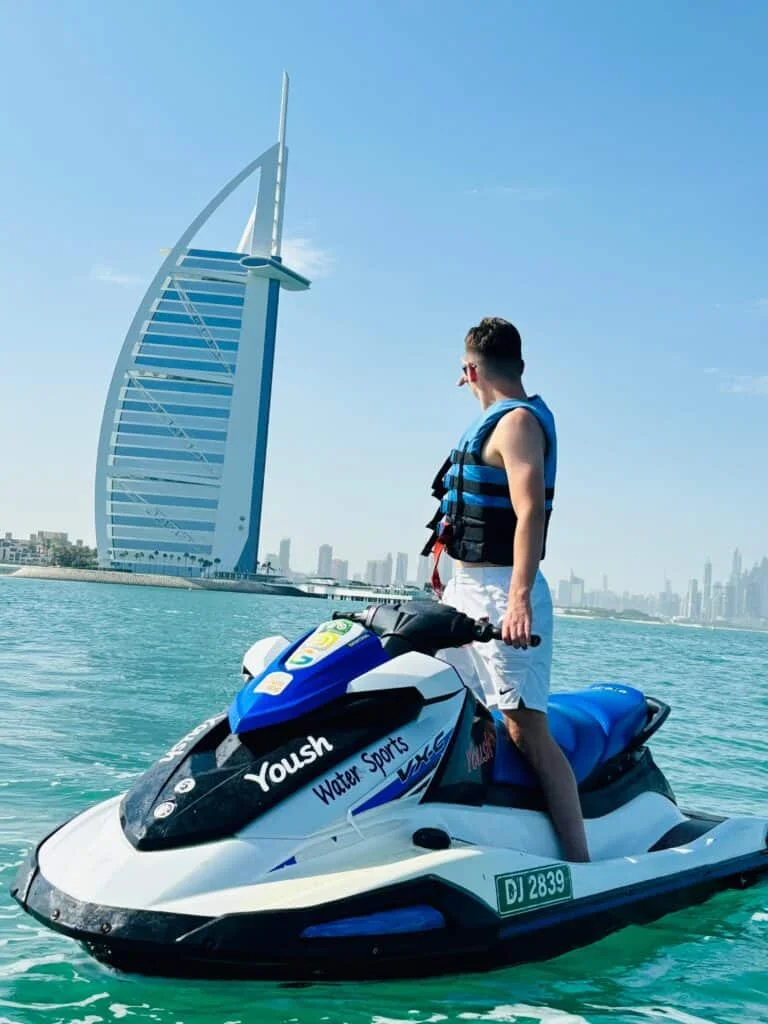
Unlike a typical boat, a jet ski is highly maneuverable and requires the rider to remain actively involved in steering and controlling the craft.
The combination of speed, waves, other vessels, swimmers, and changing weather conditions means that mistakes can have serious consequences.
Good jet ski safety starts before you even enter the water.
1. Choose a Reputable Jet Ski Operator
One of the most important safety decisions is choosing a professional and responsible operator.
Before booking a jet ski experience in Dubai, look for an operator that:
- Uses well-maintained jet skis
- Provides safety equipment
- Gives riders a proper safety briefing
- Uses experienced instructors or guides
- Follows applicable maritime rules and regulations
- Clearly explains the route and riding procedures
- Provides emergency assistance when required
- Does not encourage reckless riding
Don’t choose a jet ski experience based solely on the cheapest price.
A professional operator should prioritize safety just as much as the excitement of the experience.
2. Listen to the Safety Briefing
Every rider should receive a safety briefing before heading onto the water.
The briefing should explain how to control the jet ski, where you are allowed to ride, how to accelerate and slow down, how to turn, what to do if you fall into the water, and how to respond to an emergency.
Even experienced riders should listen.
Different locations, routes, water conditions, and jet ski models can require different procedures.
If something isn’t clear, ask the instructor before leaving the marina.
3. Understand How a Jet Ski Is Controlled
Before accelerating, familiarize yourself with the basic controls.
Most modern jet skis use handlebars for steering and a throttle control for acceleration.
Throttle
The throttle controls the engine’s power and speed.
Start slowly and increase speed gradually as you become comfortable.
Avoid immediately accelerating to maximum speed, particularly if you’re unfamiliar with the jet ski.
Steering
Jet skis steer differently from cars.
A key point for beginners is that most personal watercraft require engine thrust for effective steering.
If you release the throttle completely, steering response can be reduced.
Your instructor should explain this during the safety briefing.
Braking
Many modern jet skis are equipped with braking or reverse-assist systems.
Learn how the particular jet ski you’re using operates before leaving.
Do not assume every model has identical controls.
4. Wear Your Life Jacket
A properly fitted life jacket or personal flotation device (PFD) is essential.
Wear it throughout the ride and make sure all straps are properly secured.
Even strong swimmers should wear a life jacket.
A fall from a moving jet ski can happen unexpectedly, and a flotation device helps keep you above water while you regain your bearings.
5. Wear Appropriate Clothing and Protection
Your clothing can also contribute to your comfort and safety.
For Dubai’s climate, suitable clothing may include:
- Swimwear
- Quick-drying shorts
- A rash guard or UV-protective shirt
- Water shoes when appropriate
- Sunglasses with a secure strap
- Water-resistant sunscreen
Avoid loose accessories, expensive jewelry, and clothing that can interfere with your movement.
6. Start Slowly
If you’re a beginner, don’t try to ride like an experienced jet ski operator immediately.
Start at a comfortable speed and gradually learn how the craft responds to acceleration, steering, waves, and braking.
Get comfortable with:
- Accelerating
- Slowing down
- Turning
- Maintaining a straight line
- Crossing small waves
- Maintaining a safe distance from other vessels
Once you understand the jet ski’s handling characteristics, you can enjoy the ride with much greater confidence.
7. Maintain a Safe Speed
Speed is one of the biggest factors affecting jet ski safety.
High speed reduces your reaction time and increases the distance required to slow down or avoid an obstacle.
Always adjust your speed according to:
- Your experience level
- Weather conditions
- Wave height
- Visibility
- Traffic
- Distance from other vessels
- The operator’s instructions
- Local maritime rules
Don’t assume that open water means you can travel at maximum speed everywhere.
8. Keep a Safe Distance From Other Vessels
Dubai’s coastline can be busy with boats, yachts, jet skis, and other watercraft.
Always maintain adequate separation from other vessels.
Never assume another rider has seen you.
Be particularly careful when approaching:
- Boats
- Yachts
- Other jet skis
- Swimmers
- Kayakers
- Paddlers
- Fishing vessels
- Marina entrances and exits
Follow your guide’s instructions regarding the designated riding area and formation.
9. Avoid Sudden or Aggressive Maneuvers
Sharp turns and sudden changes in direction can be dangerous, especially at high speed.
Avoid unnecessary weaving, racing, jumping wakes, or attempting tricks unless you’re participating in an activity specifically designed and supervised for that purpose.
When turning, reduce your speed appropriately and make sure the area around you is clear.
10. Be Careful Around Waves
Waves can change the handling of a jet ski.
When approaching waves, maintain control and follow your instructor’s guidance.
Avoid hitting large waves at excessive speed.
If you’re new to jet skiing, don’t deliberately seek out large waves simply to make the ride more exciting.
The sea can change quickly, and conditions that look manageable from the shore can feel very different when you’re riding.
11. Never Ride Under the Influence
Never operate a jet ski after consuming alcohol or recreational drugs.
Impaired judgment, slower reaction times, poor coordination, and reduced awareness can dramatically increase the risk of an accident.
If you plan to drink alcohol during your day at the beach or marina, don’t operate a personal watercraft afterward.
12. Don’t Overestimate Your Ability
One of the most common mistakes in recreational water sports is believing that experience automatically eliminates risk.
Even experienced riders can encounter unexpected conditions.
If the sea becomes rough, visibility deteriorates, or you feel uncomfortable, slow down and follow the instructions of your guide or operator.
Knowing when to stop is part of being a responsible rider.
Emergency Procedures
Knowing what to do in an emergency is just as important as knowing how to operate the jet ski.
What to Do If You Fall Off the Jet Ski
Falling into the water can be startling, especially if you’re travelling at speed.
If you fall off:
- Stay calm.
- Keep your life jacket on.
- Move away from the jet ski if necessary.
- Look for your instructor or group.
- Follow the operator’s recovery procedure.
- Signal for assistance if you need help.
Never panic and attempt to swim away from the group unless instructed to do so.
Most modern jet skis are designed with safety systems that help prevent the craft from continuing to operate normally when the rider becomes separated, but procedures vary by model.
Your instructor should explain the safety lanyard or engine cut-off system before departure.
What Is the Safety Lanyard?
A safety lanyard, sometimes called an engine cut-off or emergency shut-off lanyard, connects the rider to the personal watercraft.
If the rider falls off and the lanyard is correctly attached, it can activate the engine shut-off system.
This helps prevent the jet ski from continuing to travel away from the rider.
Never remove or disable the safety lanyard while operating the craft.
What to Do If the Jet Ski Stops Working
If your jet ski loses power or develops a mechanical problem:
- Stay calm.
- Keep your life jacket on.
- Remain with the watercraft unless there is a clear safety reason to leave it.
- Contact your guide or operator using the provided communication method.
- Follow their instructions.
- Avoid attempting complicated repairs on the water unless specifically instructed and qualified to do so.
A jet ski is easier for rescuers to locate than a person alone in the water.
What to Do If You Become Separated From Your Group
If you lose sight of your group:
- Reduce speed.
- Do not continue travelling randomly.
- Look for your instructor or guide.
- Follow the agreed meeting or regrouping procedure.
- Signal for assistance if necessary.
Before departure, ask what you should do if you become separated from the group.
What to Do If Another Vessel Approaches
Maintain awareness of surrounding traffic at all times.
If another vessel approaches unexpectedly, slow down and take appropriate action based on the applicable navigation rules and your operator’s instructions.
Never assume that another vessel will automatically move out of your way.
Good situational awareness is one of the most effective ways to avoid collisions.
Dubai Jet Ski Safety Tips
Dubai provides excellent conditions for watersports, but its environment has some specific considerations.
Protect Yourself From the Sun
Dubai’s sunshine can be intense, particularly during the summer.
Apply water-resistant sunscreen before your activity and use sun-protective clothing where appropriate.
Remember that being surrounded by water does not protect you from the sun. Reflection from the sea can increase your exposure.
Stay Hydrated
Hot temperatures can increase the risk of dehydration.
Drink water before and after your jet ski session and avoid arriving at the activity already dehydrated.
During particularly hot periods, consider scheduling your ride during a cooler part of the day.
Check Weather and Sea Conditions
Water conditions can affect jet ski handling.
Professional operators should monitor conditions and make appropriate decisions about whether an activity can proceed.
If conditions become unsuitable, follow the operator’s instructions.
A cancelled or shortened ride is always preferable to taking unnecessary risks.
Be Extra Careful Around Busy Areas
Marinas, beaches, and popular coastal areas can have significant vessel traffic.
Follow designated routes and maintain appropriate separation from swimmers, boats, and other water users.
Never ride through areas where personal watercraft are prohibited.
Risk Management Before Your Ride
Good risk management means identifying potential problems before they become emergencies.
Before getting on the jet ski, consider:
Your Experience
If you’re a beginner, tell your instructor.
There is no benefit to pretending you are more experienced than you are.
Your Physical Condition
Don’t ride if you’re extremely tired, unwell, dehydrated, or otherwise unable to safely control the watercraft.
Weather Conditions
Understand the current sea and weather conditions before departure.
Equipment
Check that your life jacket fits properly and that the jet ski appears to be in suitable operating condition.
Route
Know where you’re going and whether you’re expected to remain with a guide.
Communication
Know how to contact your instructor or operator in an emergency.
Jet Ski Safety Checklist
Before starting your ride, make sure you have:
- Received a safety briefing
- Understood the jet ski controls
- Put on and secured your life jacket
- Attached the safety lanyard correctly
- Checked your clothing and accessories
- Applied sunscreen
- Understood the riding route
- Understood the emergency procedure
- Identified your instructor or guide
- Checked the general sea and weather conditions
- Agreed to follow the operator’s safety instructions
Common Jet Ski Safety Mistakes
Avoid these common mistakes:
Riding Too Fast
More speed isn’t necessarily more fun. It reduces reaction time and increases the consequences of mistakes.
Following Too Closely
Leave sufficient space between you and other watercraft.
Ignoring the Safety Briefing
Even experienced riders should understand the local route, procedures, and equipment.
Showing Off
Aggressive riding, sudden turns, unnecessary racing, and dangerous maneuvers increase risk.
Ignoring Weather Conditions
Don’t assume conditions will remain the same throughout your ride.
Riding Without a Life Jacket
Never treat a life jacket as optional.
Using a Phone While Riding
Your attention should remain on operating the jet ski and monitoring your surroundings.
Is Jet Skiing Safe?
Jet skiing can be a safe and enjoyable recreational activity when it is operated responsibly and appropriate safety measures are followed.
The biggest risks generally come from factors such as excessive speed, poor awareness, collisions, inappropriate riding behavior, inadequate safety equipment, and changing water conditions.
The good news is that many of these risks can be reduced through proper training, responsible operation, and following the instructions of a professional operator.
Jet skiing should be exciting—not reckless.

The best riders aren’t necessarily the ones who go the fastest. They’re the ones who understand their equipment, respect the water, maintain awareness of other vessels, and know how to respond when conditions change.
If you’re jet skiing in Dubai, choose a reputable operator, listen carefully to the safety briefing, wear your life jacket, maintain a safe speed, protect yourself from the sun, and follow the local rules and your guide’s instructions.
Whether you’re a first-time rider or an experienced jet ski enthusiast, a few simple precautions can make a huge difference.
Respect the sea, respect other riders, know your limits, and enjoy the ride safely.